


Muhurtas Details
Tithi Begin Time:
Tithi End Time:
Nakshatra, Muhurat (Start Time):
Nakshatra, Muhurat (End Time):
Signifcance of Padmini Ekadashi
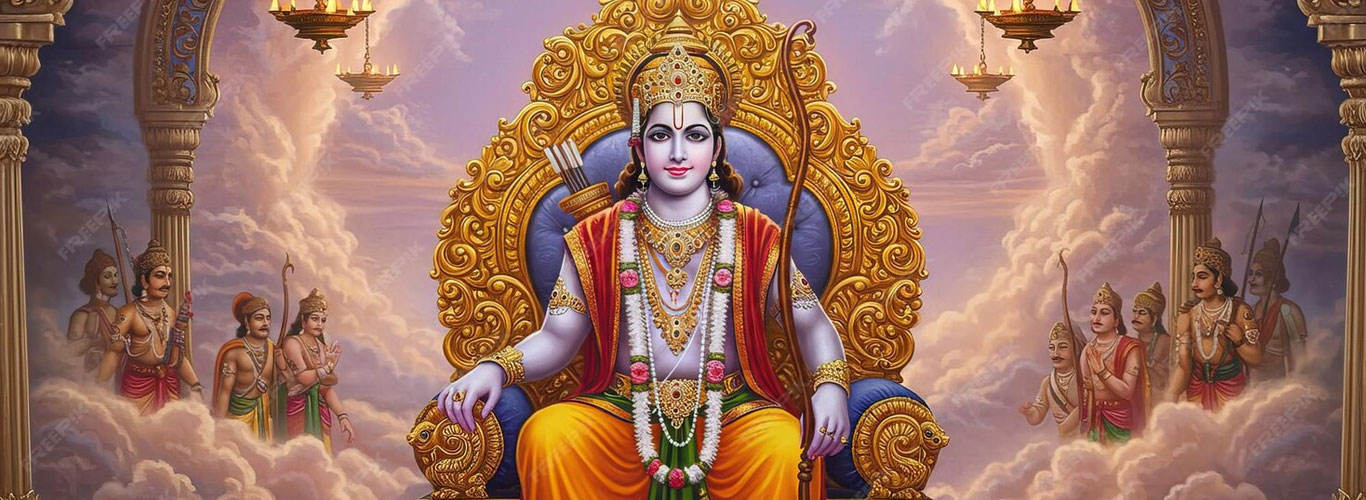
Padmini Ekadashi is also known as Kamala Ekadashi, Purushottami Ekadashi, and Adhik Maas Ekadashi. Padmini Ekadashi falls in a rare month called Adhik Maas, which is an intercalary or extra month. It is highly significant for devotion to Lord Vishnu, granting immense spiritual merit, liberation from sins, and fulfillment of desires such as having children.
It is considered equivalent to performing great sacrifices, as it is a rare opportunity to please Lord Shri Narayana and attain salvation.
Devotees of Vishnu typically observe this difficult fast and perform special worship of Lord Vishnu, who is also known as Purushottam, hence it is also called Purushottami Ekadashi.
Why Padmini Ekadashi Comes in Every Three Years?
Padmini Ekadashi is a special Ekadashi that occurs once every three years when an extra month, called Adhik Maas, is added to the Vedic calendar. This year, 2026, Padmini Ekadashi will be celebrated, as it is a leap year according to the Vedic Hindu calendar.
When Will Padmini Ekadashi be held in 2026?
Padmini Ekadashi falls on the date of 27 May, Wednesday 2026.
Frequent Asked Questions(FAQs)
According to the Hindu calendar, Ekadashi occurs twice every month, marking the 11th lunar day of both the “Shukla Paksha” (waxing phase) and the “Krishna Paksha” (waning phase) as per Moon’s transition. It is a sacred day dedicated to Lord Vishnu. On thi
Observing the Ekadashi fast leads to mental purification, the eradication of sins both known and unknown and, ultimately, the attainment of salvation.
One should wake up early in the morning, perform one's cleansings, and wear clean clothes. Thereafter, one should worship Lord Lakshmi Narayan using incense, lamps, flowers, food offerings (Naivedya), and other ritual items. There are three prescribed
One should wake up early in the morning, perform one's cleansings, and wear clean clothes. Thereafter, one should worship Lord Lakshmi Narayan using incense, lamps, flowers, food offerings (Naivedya), and other ritual items. There are three prescribed methods for observing the Ekadashi fast:
1) Sajala: This entails observing a fast throughout the entire day by consuming only water, and breaking the fast by performing Parana on the following day after sunrise.
2) Safala: This involves a fruit-based diet; one may consume a meal consisting of fruits called Phalahar once, after sunset. The fast is then broken on the following day after sunrise during the Parana period.
3)Nirjala: This involves observing a fast without consuming either water or food; this is considered a very rigorous form of fasting. The fast is subsequently broken on the following day after sunrise during the Parana period.
According to the Hindu calendar, Ekadashi occurs twice every month, marking the 11th lunar day of both the “Shukla Paksha” (waxing phase) and the “Krishna Paksha” (waning phase) as per Moon’s transition. It is a sacred day dedicated to Lord Vishnu. On this day, devotees worship Lord Vishnu by observing a fast, either by abstaining completely from food or by surviving solely on a fruit-based diet. It is believed that observing the Ekadashi fast invokes the divine grace of Lord Vishnu.
Nirjala Ekadashi is observed on the Ekadashi of the “Shukla Paksha” (waxing phase of the moon) during the month of “Jyeshtha Month” to seek the grace of Lord Vishnu and to attain the spiritual merits of all the Ekadashi observed throughout the year. It is considered the most rigorous of fasts, requiring one to abstain completely from both food and water. Subsequently, the fast must be broken the following day during the designated “Parana” period. According to mythological legends, Bhimasena observed this fast; hence, it is also known as 'Bhimseni Ekadashi'.
There is two Ekadashi occur in a month. Thus, the total of 24 Ekadashi come across in 12 months.
Nirjala Ekadashi is the most difficult one. This is because, during all other Ekadashi, you can observe the fast by consuming fruits or drinking water; however, on Nirjala Ekadashi, the fast is observed without consuming any food or water.
There is four most like Ekadashi Nirjala Ekadashi, Amalaki Ekadashi, Devshayani Ekadashi, and Dev Uthani Ekadashi.
Saphala Ekadashi is observed for the sake of success.
If you fall asleep during the day while observing a fast, your fast is considered broken. Whether it is an Ekadashi fast or a Navratri fast.
You may observe it for as many years as you wish. However, according to the “Vishnu Purana”, observing the Ekadashi Fast for at least 11 years is considered meritorious.