
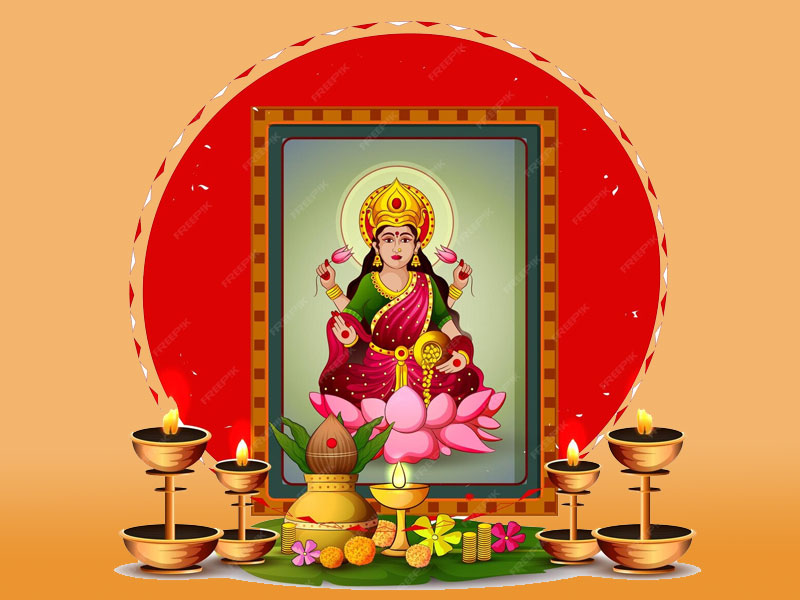
All of us who are Hindus perform daily puja to our chosen deity. However, with the new generation, that interest has diminished, but even today, some people still perform daily puja. The procedure for worshipping the deity is generally similar to the ancient tradition of hospitality. In this, we invoke the deity and offer various items as a gesture of service and respect.
However, there are two steps to performing deity worship: 1) Self-purification or sanctification and meditation-prayer. 2) Purification or sanctification of the puja materials used to worship the deity.
In addition, the ritual also includes invoking a divine feeling in both oneself and the objects used. Along with the rituals, the process of chanting mantras generally involves both Vedic and worldly mantras. Vedic mantras are generally philosophical in nature, and over time, they came to be used in rituals.
From a ritualistic perspective, there are two main types of puja:
1) Panchopachara and
2) Shodashopachara puja.
Panchopachara Puja
Panchopachara puja requires the following items:
Panchopachar puja include Incense, lamp, flowers, offerings (Naivedya), sandalwood or tilak these five items are essential.
Shodashopachara Puja Items
Shodashopachar include Incense, lamp, flowers, offerings (Naivedya), sandalwood (Gandha), Roli, Moli, Kalawa, clothing, ornaments (jewellery), Kumkum, turmeric, Akshat, perfume, Ganges water, and Dakshina (offering).
But according to the scriptures, the 16 treatments or Shodashopachar are as follows:
Meditation, Invocation, Asana (seat), Padya (washing of feet), Arghya (offering of water), Achamana (sipping of water), Snana (bathing), Vastra (clothing), Yagyopaveeta (sacred thread), Gandha (sandalwood paste), Pushpa (flowers), Dhoopa (incense), Deepa (lamp), Naivedya (food offering), Tambula (betel leaf), Aarti, and Dakshina (offering). This was the 16-step puja ritual for all gods and goddesses. If you are performing Devi Puja, then "16 Shringar," which consists of cosmetic items used for adornment, is offered to the goddess.
There is no single uniform procedure that can be prescribed for worship, as the process may vary depending on the occasion and the deity. We all know that devotion has no limitations. Lord Sri Krishna himself said to Arjuna, Hey Arjun! "There is no prescribed method for worshipping me.
People can worship me in any form, with any feeling. I don't need offerings of elaborate food every day. If someone offers me water or flowers or leaves with devotion, that is more than enough for me." Therefore, there are no specific rules and regulations that can standardize the feeling of devotion, because that is impossible.
Nevertheless, our sages and ascetics, through meditation and spiritual practice, have created some rules for attaining God, and we have been following them to this day.
Before the commencement of every puja, the following rituals must be performed:
Self-purification, purification of the seat, wearing of the sacred thread, worship of the earth, taking a vow, worship of the lamp, worship of the conch shell, worship of the bell, recitation of auspicious verses, etc.
- During the puja, the ground, clothes, and seat should be clean and pure. It is also necessary to purify everything with mantras.
- A square, rangoli, or mandap should be made as needed. This is mandatory if a havan or yagna is to be performed.
- According to tradition, the auspicious time (muhurta) for the puja can be considered for any auspicious work.
- Ideally, during the puja, the Yajman (the person performing the puja) should sit facing north. If this is not convenient, they can sit facing east. The priest should sit facing east; if this is not possible, they can sit facing east or north.
- If the Yajman is married, the wife should sit to the left of her husband, with their garments tied together.
- During the puja, the priest or the Yajman should perform the following as needed:
- Anganyasa (placing hands on different parts of the body),
- Karanyasa (placing hands on different parts of the hands),
- Use of mudras (hand gestures), etc.
If you want to perform a puja at home, the “16-Step Puja” might be a bit difficult for you. In that case, I would suggest the “5-Step Puja” (Panchopachar), which is less expensive and can be easily performed at home by yourself.




0 Comments
Leave a Reply
Your email address will not be published. Required fields are marked *