
Jupiter Mahadasha

Jupiter Mahadasha in Astrology
| Added by: Astro Editorial Team

Jupiter Importance

Jupiter is one of the most beneficial planets in astrology. If Jupiter is in “Kendra Bhav” it will protects from all types of negativities and bad situations in the native’s life. Jupiter Mahadasha goes for 16 years, a strong Jupiter bestows the native everything during the Dasha and Antardashas.

Jupiter Ruled in Which Nakshatras?

Jupiter ruled on Punarvasu, Vishakha, and Purva Bhadrapada nakshatras. It is exalted in the Cancer Sign and debilitated in the Capricorn Sign. Jupiter Dasha is good for Sagittarius, Cancer, Aries, Leo and Scorpio signs. The Sun, Moon and Mars are the natural fiends of Jupiter, it is the natural beneficial planet and has three aspects 5th, 7th and 9th beneficial aspects, it is also called divine planet.

Positive Jupiter

  • A strong Jupiter will give name, fame, fortune, personalities, and a respected life in the societies, a good learner, believe in god, respect religions and followed rituals.
  • A strong Jupiter provides better income and finances, if it is weak and afflicted creates problem in the education, suffers from failures, poverty and many miseries including fall from position and ill-health, commits evil deeds, becomes frustrated, sons or grandsons may also suffer.
  • The natives will enjoy a blissful life as well as enjoy happy married life.
  • The native will be very knowledgeable person, obey the elders and follow the teachers rule.
  • The native will be very incline towards spiritual works and often willing to visit pilgrimage places.
  • The native will behave like a matured person, have great patience, manners in the behave seen and wiser.

Negative Jupiter

  • A negative Jupiter will give adverse effects in terms of luck.
  • Jupiter does not have almost negative effects like a malefic planet. However, it can affect by losing the wealth and money. The native may suffer from promotion to demotion, disrespected and monetary loss.
  • The native may loss name and fame and the reputation in society.
  • Jupiter may give loss of all your trusted friends and well-wishers. The native also may feel he/she is alone in the life.
  • The native may face issues in higher education, below the rank and sometimes creates obstacles during the educational period.
  • Jupiter also creates an obstacle in the jobs and career. Native’s business also fluctuates time to time.
  • During its Dasha and Antardasha, Jupiter gives many diseases like asthma, diabetes, high blood sugar, gastro intestinal and liver issues.

Mahadasha Period:16 Years

Ruled on Nakshatras: Punarvasu, Vishakha, Purva Bhadrapada

Frequent Asked Questions(FAQs)

Mahadasha is a broad, major period lasting several years. Antardasha is a subperiod within it, called a subperiod, and Pratyantardasha is a smaller, sub-sub-period or sub-subperiod. It works like this. This is called the 3-tiered Dasha hierarchy.

For example, what is the duration of Shani Antardasha and Pratyantar Dasha in Shani's Mahadasha?

Shani: Mahadasha (19 years) > Antardasha (around 3 years) > Pratyantar Dasha (around 3 months).

The total Vimshottari Dasha period is 120 years. These 120 years are divided by 9 planets, and the sequence and duration are as follows:

According to Parashara Jyotish, the 120-year cycle of Mahadasha runs in this fixed order. After Mercury's Mahadasha, the cycle begins again with Ketu.

  • Ketu: 7 years
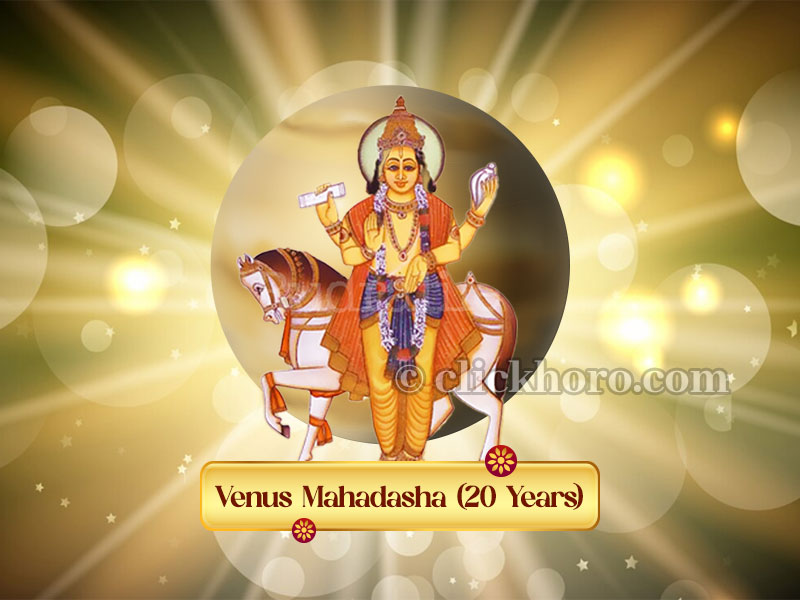
  • Venus (Shukra): 20 years
  • Sun (Surya): 6 years
  • Moon (Chandra): 10 years
  • Mars (Mangal): 7 years
  • Rahu: 18 years
  • Jupiter (Guru): 16 years
  • Saturn (Shani): 19 years
  • Mercury (Budha): 17 years.

Yes, a planet's dasha can suddenly change your life, especially in Mars and Ketu Mahadasha. Suppose Saturn's Mahadasha is ongoing, and Saturn is not favorable for you. Similarly, Mercury is exalted and favorable in your horoscope. This means Saturn Dasha will not go well, and when Saturn Dasha ends and Mercury Dasha begins, you will see many positive opportunities and your social status will be elevated.

Gochar Dasha means the current transit of planets relative to your birth chart. While the Dasha system (planetary periods) represents the timeframe associated with actions, Gochara represents the real-time movement of planets in the sky. It acts as an immediate trigger, bringing previously anticipated events into reality. Suppose Saturn is debilitated in your birth chart (Kundli), and the *Mahadasha* (major planetary period) of Saturn is currently in effect. Simultaneously, in the annual horoscope, one must observe which zodiac sign Saturn is transiting through. Based on these placements and positions, an astrologer then provides a prediction.

“Rikta” means 'empty' or 'void.' The 4th, 9th, and 14th lunar days (Tithi) of both the waxing (Shukla) and waning (Krishna) phases of the moon are referred to as Rikta Tithis. These dates are generally considered inauspicious and are deemed prohibited for auspicious and ceremonial events, such as weddings or house warming ceremonies Griha Pravesh. However, these dates are considered highly excellent for the practice of Tantra, Mantra Sadhana, or for undertaking secretive activities. Purna means 'full' or 'complete.' The Purnima (Full Moon Day) represents the most excellent form within this category. The 5th, 10th, and 15th (Purnima) lunar days of every month (specifically during the waxing phase Shukla Paksha are designated as Purna Tithi.

The total cycle of the Vimshottari Dasha system spans 120 years (the duration of the Dasha planetary period varies for each planet; for instance, Venus's Dasha lasts 20 years, while Saturn's lasts 19 years). The planet ruling the specific Nakshatra (lunar mansion) in which the Moon is positioned at the time of birth initiates the native's first Mahadasha. Subsequently, the Dasha proceed in a fixed sequence: Ketu, Venus, Sun, Moon, Mars, Rahu, Jupiter, Saturn, and Mercury.

In Rashi Dasha, the primary focus lies on the zodiac sign (Rashi) rather than the movement of the Moon. The most renowned Rashi Dasha system is the Chara Dasha. In this system, the planetary periods are governed not by individual planets, but by the zodiac signs themselves (such as Aries, Taurus, Gemini, etc.). Astrology employs specific mathematical rules to determine how the Dasha transitions from one zodiac sign to the next.

The total duration for the Mahadasha periods of all nine planets combined is 120 years. This collective cycle is referred to as the Vimshottari Mahadasha period.

The shortest Mahadasha period is that of the Sun, lasting only 6 years.

Venus has the longest Mahadasha period of 20 years.

To know how your coming up Dasha period will be, you will need to look at your horoscope. In the horoscope, you will need to look at the Lagna's friendly and enemy planets, house placement, auspicious and inauspicious signs, along with the planet's strength.

Rahu, Mars and Ketu Mahadasha bring sudden changes to a person's life.

Venus Mahadasha and Saturn Antardasha, as well as the Saturn Mahadasha and Venus Antardasha periods, are not good for the native.

Shani Mahadasha follows the Jupiter Mahadasha, which lasts for 19 years and teaches discipline, structure, and realism in life.

The Venus Antardasha during Jupiter or Guru Mahadasha usually brings a highly auspicious time of balanced growth. You can expect a beautiful blend of higher knowledge and material comforts, making it an excellent time for financial gains, learning, relationships, and overall well-being.

Jupiter, Venus, and Mercury generally produce the most favorable results during the 18-year Rahu Mahadasha. Rahu influences the planet it is placed in, so its results depend largely on the Antardasha.

Basically, Mercury and Jupiter are both enemies to each other. The beginning of the Jupiter Antardasha will be good because both Jupiter and Mercury are naturally beneficial planets. The end of the Jupiter Antardasha can create problems for the native, such as financial instability, a fall from status, and sleep. However, it still depends on the placement and position of the planets.

Shani Dasha is called the Janma Shani Period, which is a total of 19 years. Shani Dheya takes around two and a half years to transit a zodiac sign. When Saturn transits the 4th or 8th house from the Moon, it is called Shani Dheya Period. When Saturn transits the 12th house from the Moon, it is called Sade Sati. Saturn can give positive and negative results depending on its placement and position in the Dasha.

Venus Mahadasha is the longest Dasha in the Vimsottari Period. A beneficial Venus gives prosperity, happiness, and artistic success, luxury, and a life of pleasure. While an afflicted Venus can lead to overindulgence, financial instability, and relationship friction.

Rahu sub-period (Antardasha) during the Mercury Mahadasha. This period of intense intellectual growth mixed with mental restlessness. Because Rahu amplifies the shadowy and analytical traits of Mercury, you may experience a blend of sudden opportunities and erratic communication, mental restless, overthinking may see in the time.

0 Comments

Leave a Reply

Your email address will not be published. Required fields are marked *

Yearly Horoscope Report 2026