
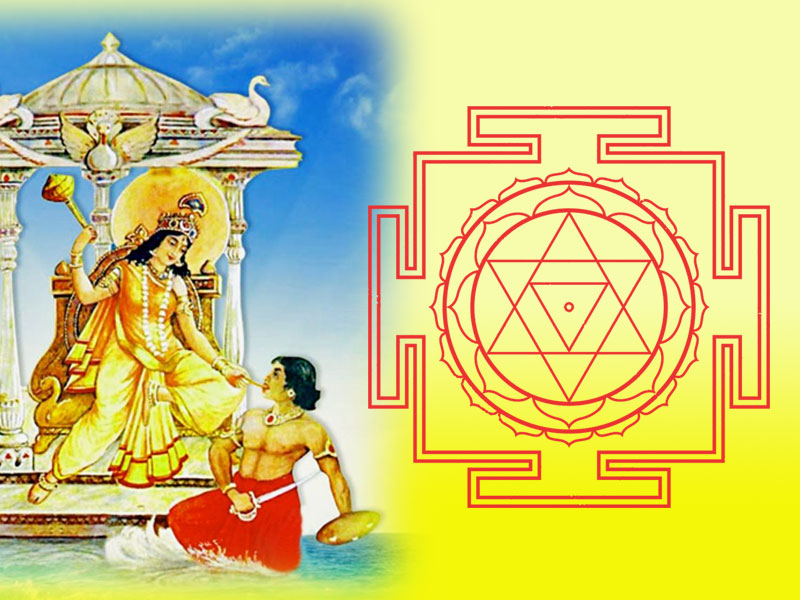
Who is Bagalmukhi?
Baglamukhi Mahavidya is the eighth of the ten Mahavidyas. This Mahavidya is an infallible Brahmastra for destroying enemies. If you are innocent and truthful, Baglamukhi Sadhana will always protect you and your family like an infallible weapon.
It will destroy your enemies completely. Mother Baglamukhi is the Yamaraj of enemies. Similarly, if you have any Baglamukhi Sadhana, never mess with a Baglamukhi Sadhana without any reason. To practice Baglamukhi Mahavidya, the Sadhana of Mahadevi Baglamukhi is performed through the Satvik path, i.e., the Dakshina Marga. Through Baglamukhi Sadhana, the Sadhana bestows Dharma, Artha, Kama, and Mosha.
This Sadhana can be performed from home. I have seen many Sadhaks who have been practicing this Sadhana for 30 years and are very happy in their family life. It is also beneficial for their married life. When the entire family is devoted to Goddess Baglamukhi, what can one say? Whether it's an inauspicious planet, a disease, or even hidden enemies, they can't dare harm them in the slightest.
If you practice Baglamukhi Sadhana with sincerity and justice, it quickly becomes effective and destroys the entire enemy's family. Performing Baglamukhi Sadhana removes the Praval Shatru Hanta Yoga in your horoscope.
Preparation and Rules for Sadhana
- To perform Sadhana, it is essential to stay with a Guru and perform it with complete devotion.
- On this day, wake up early in the morning, complete your daily chores, and sit on a seat facing east.
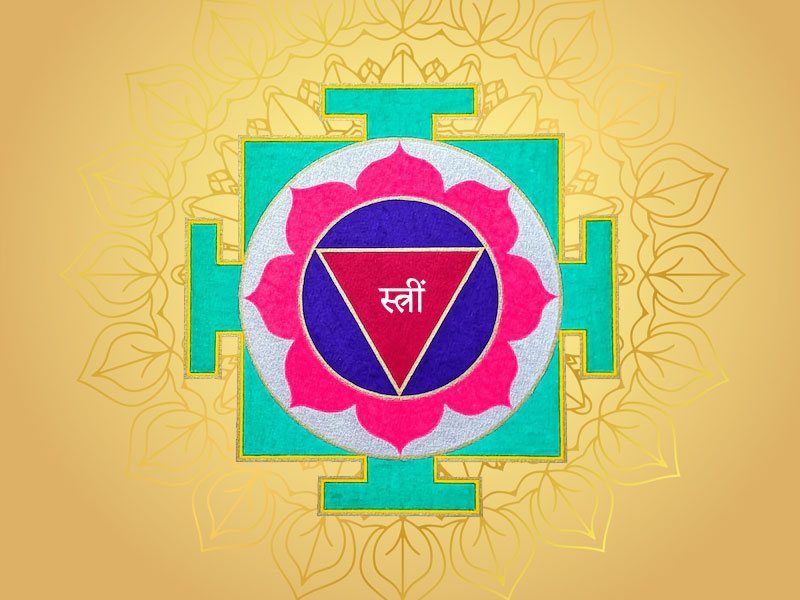
- Spread a yellow cloth on a stool and place a picture or yantra of Goddess Baglamukhi on it. If possible, a Baglamukhi yantra is made from gram lentils, or a yantra inscribed on copper or silver is used.
- Then Install the Kalash as per vedic rules.
- The seeker must wear yellow clothes during the worship of Goddess Baglamukhi. Afterward, perform a sip of water and tie their hands.
- Purify the seat, recite the Swasti Vachana mantra, and light a cow ghee lamp. Then, take yellow rice, turmeric, yellow flowers, and Dakshina in your hands and make the resolution (Sanakalp) with the following mantra.
- Next, meditate on Guruji and Lord Ganesha and worship their feet. Then, invoke Lord Varuna, worship the Kalash, and then invoke the Goddess.
- Yellow flowers and turmeric should be used in the puja. Did you know? The color yellow holds special significance in Baglamukhi Sadhana. Everything in the puja should be yellow, such as yellow clothes, a yellow seat, yellow fruits, and yellow offerings.
- Perform Shodashopachara or Panchopachara Worship of the Goddess Now invoke the Goddess with the following mantra, and then invoke her and offer her a seat.
Then invoke Goddess Baglamukhi while chanting this mantra.
॥ अथः मंत्र ॥
नमस्ते बगलादेवी जिह्वा स्तम्भनकारिणीम्।
भजेहं शत्रुनाशार्थं मदिरा सक्त मानसम्।।- After invocation, offer her a flower, provide her a seat, sprinkle water on her and bathe her, and worship her in this manner. After this, worship is done using the Shodashopachara or Panchopachara method.
- Bath her with Panchamrit (milk, curd, ghee, honey, jaggery) and then with pure water. After this, offer yellow sandalwood (gand), yellow flowers (pushp), incense, lamps and naivedya (prasad) to the Goddess.
- Yellow sweets or fruits are also considered appropriate as prasad. After this, offer gand, rice and flowers and worship the Kalash and Navgraha with Panchopachar.
Sandalwood and Fragrance Powder
Apply yellow sandalwood paste and offer yellow flowers to Goddess
Baglamukhi while reciting the following mantra.
॥ अथः मंत्र ॥
ऊँ बगलादेव्यै नम: गंधाक्षत समर्पयामि।
- Flowers
Offer yellow flowers to Goddess Baglamukhi while chanting the following mantra.
॥ अथः मंत्र ॥
ऊँ बगलादेव्यै नम: पुष्पाणि समर्पयामि।
-
Incense (Dhoop)
Offer incense to Goddess Baglamukhi while chanting the following mantra.
॥ अथः मंत्र ॥
ऊँ बगलादेव्यै नम: धूपंआघ्रापयामि।
-
Deepa (Lamp)
Show the lamp to Goddess Baglamukhi while chanting the following mantra.
॥ अथः मंत्र ॥
ऊँ बगलादेव्यै नम: दीपं दर्शयामि।
-
Naivedya
Offer yellow sweets to Goddess Baglamukhi while chanting the following mantra.
॥ अथः मंत्र ॥
ऊँ बगलादेव्यै नम: नैवेद्य निवेदयामि।
-
Recite following Vini Yoga Mantra
Before chanting the mantra, recite the Japa Viniyoga for Baglamukhi Mantra.
॥ अथः मंत्र ॥
श्री ब्रह्मास्त्र-विद्या बगलामुख्या नारद ऋषये नम: शिरसि।
त्रिष्टुप् छन्दसे नमो मुखे। श्री बगलामुखी दैवतायै नमो ह्रदये।
ह्रीं बीजाय नमो गुह्ये। स्वाहा शक्तये नम: पाद्यो:।
ऊँ नम: सर्वांगं श्री बगलामुखी देवता प्रसाद सिद्धयर्थ न्यासे विनियोग:। -
Main Mantra Chanting Method
Then this mantra, which is the most excellent and fruitful mantra of Maa Baglamukhi, is the 36-letter root mantra. Start it by remembering your Guru and paying respect:
॥ अथः मंत्र ॥
ॐ ह्लीं बगलामुखी सर्वदुष्टानां वाचं मुखं पदं स्तम्भय जिह्वां कीलय बुद्धिं विनाशय ह्लीं ॐ स्वाहा।
- This mantra is chanted with a turmeric rosary with 108 beads. The number of repetitions depends on the practitioner's purpose and the guru's instructions, but a ritual of 100,000 repetitions is generally performed for getting a siddhi.
- During the chanting, the practitioner should sit facing east, although other directions are also prescribed for some special practices. It is important to pronounce the mantra correctly.
- Completion of the Ritual and Homa (Havan) When the prescribed number of mantra chants called Purascharana is completed, it is necessary to perform a 10% Havan and a 10% Tarpan to complete the sadhana.
- Offering white sesame seeds and rice mixed with milk in the havan helps to ward off poverty,
- While offering Gugglu and sesame seeds helps to get freedom from imprisonment.
- Havan should be performed only with a Siddha Sadhak or Guru. At the end of the ritual, pray to the Goddess for the fulfilment of your wishes and for forgiveness for any mistakes.
॥ अथः मंत्र ॥
न मत्रं नो यन्त्रं तदपि च न जाने स्तुतिमहो
न चाह्वानं ध्यानं तदपि च न जाने स्तुतिकथाः।
न जाने मुद्रास्ते तदपि च न जाने विलपनं
परं जाने मातस्त्वदनुसरणं क्लेशहरणम् ॥१॥
मत्समः पातकी नास्ति पापघ्नी त्वत्समा न हि।
एवं ज्ञात्वा महादेवि यथायोग्यं तथा कुरु ॥१२॥ - Some Rules in Mind During Baglamukhi Mahavidya Sadhana You should use a turmeric rosary to chant the mantra; it is essential to observe celibacy during the Sadhana period.
- It is mandatory for the Sadhak to eat a sattvic diet during the Sadhana period.
- This Sadhana is often performed at night, preferably between 11 pm and 4 am.
- If you are practicing any Dasa Mahavidya Sadhana, you must do it at midnight, as the divine power is active at midnight. Therefore, if Sadhak practices at that time, they will achieve quick success in their Sadhana.
-
Four Times Navaratri Comes in a Year
There are four Navratri come in a year, such as Sharadiya Navratri (Sept-October), Gupta Navratri (January-February), Basantika Navratri (March-April), Gupta Navratri (June-July). It is necessary for the seeker to do Mahavidya Sadhana in these four Navratris, no matter why you do Sadhana of any Mahavidya or not, it does not matter how. - Especially if Japa is done during Grahan period like Solar or Lunar Eclipse, the result of Japa increases 10 times and the chances of Mantra becoming Siddhi are more.
- During Sadhana, the seeker must maintain restraint on food, clothing, and rest. Do not gossip about anyone, do not slander, do not speak ill of anyone, do not tell unnecessary lies. It will be very good for your sadhana to remain silent as much as possible.
- The sadhana of Maa Baglamukhi is considered to be one of the most powerful and secret sadhanas among the Dash Mahavidyas. This goddess has been created especially for the destruction of enemies.
Sthmbhana Devi Goddess Bagalamukhi
Bagalamukhi Mahavidya makes the enemies 'Stambhana'. It is famous for its power to stun the enemies and gives the Sadhak victory over enemies, negative energy and court cases.- For the sadhana of Dash Mahavidya, chanting on top of a mountain is considered to be the best. Because for meditation, it is necessary to have a quiet and sacred place where there should be you only or with your Guru.
- Anyone performing sadhana of the Ten Mahavidyas must do so at midnight, as the divine power is active at midnight. Therefore, if the practitioner performs sadhana at that time, their sadhana will achieve quick success.
Best to Perform Japa in Solar or Lunar Eclipse
Especially during eclipses, such as solar or lunar eclipses, the results of chanting are increased tenfold, and the mantra's effectiveness is increased.
During the practice, it is important for the practitioner to exercise restraint in their diet, speech, sex, and speech. Avoid gossiping, criticizing, speaking ill of, or telling unnecessary lies. Remaining silent as much as possible will be beneficial for your practice. The practice of Maa Baglamukhi is considered one of the most powerful and secret practices among the ten Mahavidyas. The Goddess specifically designed it to defeat enemies.
Bagalamukhi Mahavidya "stambhans" enemies. It is renowned for its power to stun and empower the practitioner to overcome enemies, negative energy, and court cases.
For the practice of the Ten Mahavidyas, chanting on top of a mountain is considered the best option. This requires a quiet and sacred place where only the Goddess is present and no one else is present.
If you chase after sensual pleasures, your pursuit will never end. But if your goal is to attain God, the luxuries themselves will become your slaves and serve you. Human life is attained with great difficulty. Do not waste it. We all know that we will not take anything with us from this world.
Even if you accumulate millions of rupees here, it will be futile until you attain the Supreme Father. The happiness found in the refuge of that Supreme Being cannot be found in any of the luxuries of this world.
Through spiritual practice, a seeker attains the power of speech. Whatever they say comes true. They are especially fond of yellow flowers, prasad made of gram flour and ghee, bananas, and fragrant flowers.
Devi Sadhana and Kundalini Shakti
Through the worship of the Goddess, the Kundalini Shakti reaches the practitioner's throat. The throat chakra is known as Vishuddhi, symbolizing complete purity. The Vishuddhi Chakra is depicted as a sixteen-petaled lotus. It is said that the flow of knowledge in the throat is compared to immortality or nectar.
Worshiping Goddess Baglamukhi gives the devotee the courage to speak the purity of knowledge and also helps to remove the poison of avidya or ignorance.
Worshiping Goddess Baglamukhi is also associated with the Anahata Chakra and the Ajna Chakra on the forehead. Because cosmic knowledge is accepted with sensitivity and empathy from the heart, worshipping the Goddess gives courage. Additionally, in advanced forms of worship, the Kundalini Shakti is raised to the Ajna Chakra on the forehead. Because words have the power to command, Goddess Baglamukhi helps the devotee attain the power of Bak Siddhi.
A devotee should worship the Goddess in a Tantric manner, according to his or her nature and abilities. Sadhana of any Mahavidya is not done through Vedic rituals. We have already mentioned that there are three main methods of Sadhana of Goddess Mahavidya:
1) Dakshinachara, followed vaidic ritual with meditation.
2) Vaamachara & Kaulachara, which are the Sadhana of Goddess Bhagwati Mahavidya done through Tantra Kriya.
The Famous Goddess Bagalamukhi Temples Located
The famous temples of Maa Baglamukhi Pitambara are located in India:
1) Datia and Nalkheda (Shajapur district) in Madhya Pradesh,
2) Kamakhya Shakti Peetha in Assam
3) Sindhanur taluk, Raichur, Karnataka
4) Virupakshi, Kolar, Karnataka
5) Bankhandi, Kangra, Himachal Pradesh




0 Comments
Leave a Reply
Your email address will not be published. Required fields are marked *