
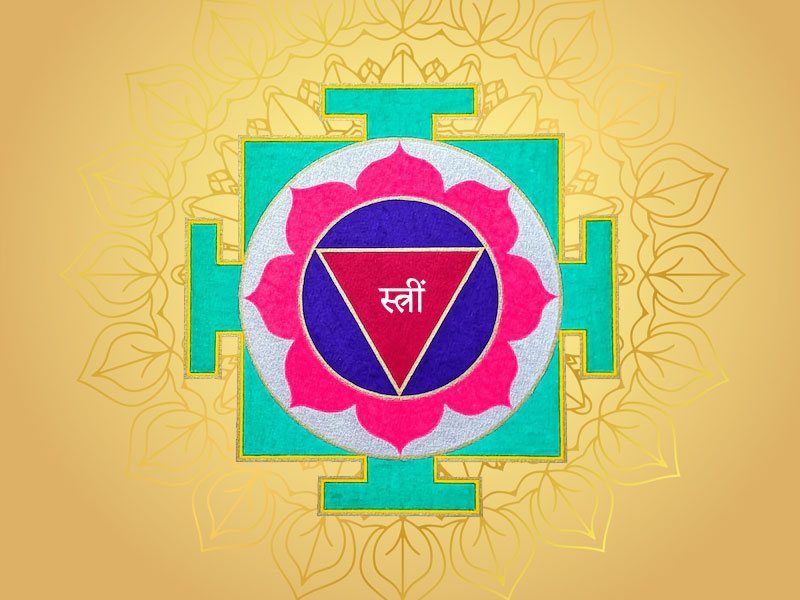
Who is Tara Mahavidya?
The word "Tara" means one who delivers from despair, and she holds the second position among the Dasha Mahavidyas. Primarily, Tara is a form of Durga or Parvati. When the power of demons increased on Earth, Mother Parvati received the energy of Lakshmi and Saraswati and took the form of Durga.
When Mother Durga gave birth to the demons, she was ready to create all forms, such as the ten Mahavidyas, 64 Yoginis, Dakinis, Shakinis, Navadurga, etc.
The principal goddesses of most demons are Tara and Kali, and these two are considered one. The Mother is also called Tara because she is the one who delivers.
Different Forms of Tara Mahavidya
Mainly, there are three forms of Goddess Tara: 1) Ugra Tara, 2) Ekajata Tara, and 3) Nilasaraswati.
Ugra Tara
1) Ugra Tara, who looks almost like Goddess Kali. However, the slight difference between the two is that Goddess Tara stands on a corpse, while Goddess Kali stands on Lord Shiva.
Ekajata Tara
2) Ekajata Tara resembles Shiva. When the power of poison increased to such an extent that it became uncontrollable, Goddess Ekajata Tara consumed half of the poison herself that’s why her body color turned into blue colcor.
Nilasaraswati
3) Nilasaraswati is the goddess of knowledge; some also call she is also Goddess Matangi by the name Nilasaraswati. Nilasaraswati was the goddess of knowledge, and Guru Brihaspati was a great devotee of hers.
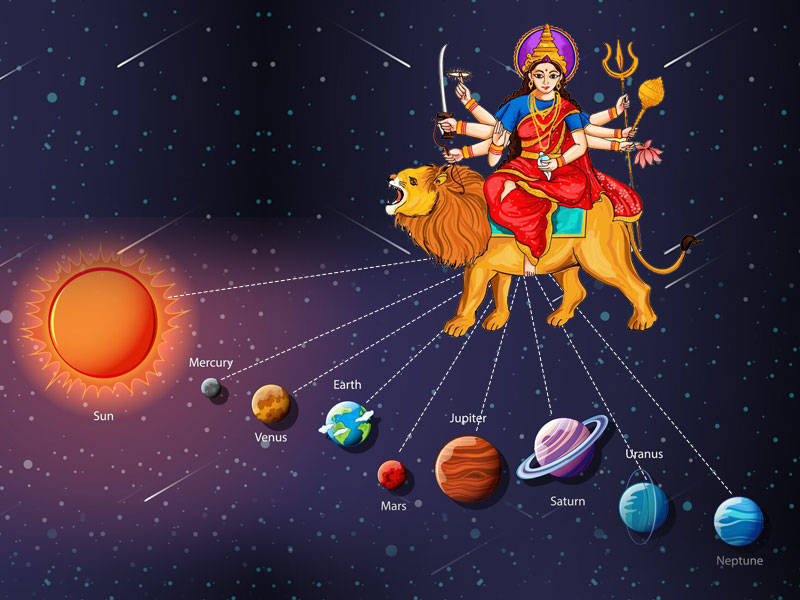
Practicing Tara Sadhana (spiritual practice dedicated to the goddess Tara) grants the practitioner attainment of Dharma (righteousness), Artha (wealth), Kama (desire), and Moksha (liberation). The wealth and knowledge of a practitioner of Tara Sadhana never diminish, because those who practice Tara Sadhana always receive the blessings of Jupiter (Guru Brihaspati).
Jupiter is the significator of wealth and knowledge. Wherever Jupiter is placed in the birth chart, it casts its influence on three other houses. Therefore, it generates wealth for the practitioner from some source or another. Jupiter has 5th, 7th, and 9th aspects. These are all aspects that generate wealth.
While practicing Tara Sadhana, the practitioner's knowledge (hidden knowledge) increases significantly. Knowledge here doesn't mean pursuing professional courses in medicine or engineering. Knowledge means understanding what this creation and the universe are, how they function, who governs them, why I came to this earth, why God sent me here, why I received a human birth, etc.
Attaining this knowledge means your third eye has opened. When this third eye opens, a person becomes different from everyone else, and their intuitive power increases so much that they can know and feel what will happen in the coming hours.
Why is Mother Tara's Color Blue?
Mother Tara is blue in color, and that is why she is also called Neel Saraswati. Tara Sadhana is primarily performed to attain knowledge, wisdom, wealth, and fulfilment in life. Goddess Tara always protects her devotees from all kinds of dangers. She provides protection from natural calamities, business ventures, and other life goals.
Maharishi Vashisht Attained the Gyan Yoga by Doing Meditation of Goddess Tara.
Maharishi Vashistha was also a great ascetic, the secret gyan yoga knowledge he had, you will understand it when you read “Shri Yoga Vashistha” scripture book.
The importance of Goddess Tara is immense in China. Maharishi Vashistha and Gautama Buddha were both devotees of Mother Tara. Maharishi Vashistha wanted to begin his spiritual practice without a guru, but even after several years, he did not attain enlightenment.
Troubled, then he met Gautama Buddha and then traveled to China to pursue spiritual practice. He went to China along the banks of the Brahmaputra River, received initiation from a guru there, and learned the practice. Later, he returned to India, built an ashram on the banks of the Ganges River in Birbhum, West Bengal, and after years of penance, received knowledge from Mother Tara.
Bamakhepa was a Great Devotee of Mother Tara
Today, there is a large temple of Goddess Tara at that very spot, where Mother Tara has been worshipped for centuries. Today, it is famous as Tara Shakti Peeth. Another famous devotee at Tara Peeth in Birbhum was named "Bamakhepa." He was a renowned devotee of Mother Tara.
The way Mother Tara bestowed knowledge upon him was extraordinary; he always spoke of things beyond the realm of creation, which ordinary people could not understand, and some even considered him mad. He was also known as the "Mad Saint of Tarapith," known for his intense devotion, Vedic practices, and miracles.
He was born in the Birbhum district and spent most of his time worshipping Mother Tara in the cremation ground. He began his spiritual practice of Mother Tara at a very young age. Mother Tara bestowed such grace upon him, similar to the grace Mother Kali bestowed upon Sri Ramakrishna Paramahansa. Both were ardent devotees of Goddess Jagadamba.
Gautam Buddha Attained Enlightenment by Meditating on Mother Tara?
That's right, Gautama Buddha also practiced Tara Sadhana on his own, without a guru, but after a few years, he felt that something was missing, something he didn't understand.
He then travelled to China along the Brahmaputra River to learn Tara Sadhana. At that time, there was no other route to China except along the Brahmaputra River. It is said that Gautama Buddha initially performed intense penance in China, but nothing came of it.
He then returned to India and began his penance under a Bodhi tree in Gaya, on the banks of the Ganges River. After six years of rigorous penance, he attained enlightenment (Sambodhi) on the day of Vaishakha Purnima. Distressed by the suffering of the world, he renounced his worldly life and, following the Middle Way, attained self-realization through meditation.
Tara Mahavidya is the second of the Dasha Mahavidyas. Another way to look at it is that if a practitioner performs the sadhana correctly, they attain siddhi (spiritual power) quickly. Siddhi is attained most quickly through Kali sadhana, which is why it is ranked first. Mother Tara is a form of Kali; she is also known as Bhadra Kali and Sharala. She is a gentle form of Goddess Kali. That is, Mother Tara Devi is very calm and peaceful.
But remember, for any Mahavidya, you must receive initiation from a guru; without a guru, you will never attain siddhi; it's not that easy.
There are certain rules and regulations for the sadhana of each Mahavidya. Your guru knows these rules and regulations and is experienced; when they provide proper guidance, the practitioner attains siddhi quickly.
Nevertheless, here we include some of the main steps of Tara sadhana, things to keep in mind while performing Tara Mahavidya sadhana.
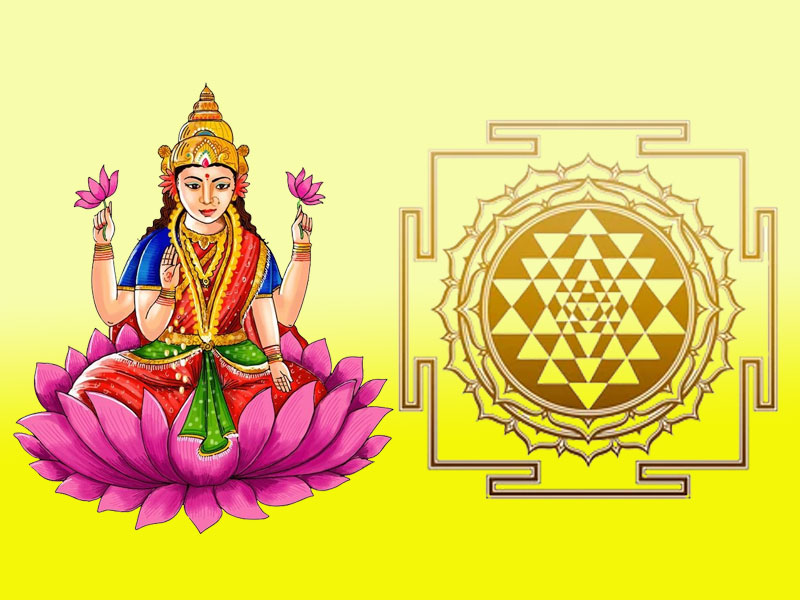
Our Gurudev, who lived in Devi Pindi, was also a great practitioner; he passed away at the age of 96. He always taught us about knowledge, and I am share with you what he taught me about how to perform Shri Chakra sadhana and Tara Mahavidya sadhana.
Tarapith in Birbhum is one of the 51 Shakti Peethas. The celebrations of Goddess Sati were held here, which is why this place is also called Nayantara. This place is located in the Birbhum district of West Bengal.
Benefits of Tara Sadhana
The devotee is guided through various Tantric principles suitable for the worship of Tara Mahavidya by the Guru. The path of Tara Mahavidya should be chosen according to the nature of the devotee.
The worship of Tara Mahavidya, when performed with devotional guidance, frees the devotee from fear, inauspiciousness, and negativity.
The practitioner overcomes descriptions, attachments, and anxieties by meditating on the Goddess. The individual receives inner peace, prosperity, and spiritual growth through her blessings. Goddess Tara is associated with knowledge, as is the planet Jupiter.
However, the theoretical aspect of knowledge, or ignorance (avidya), can invite the curse or influence of Jupiter. She removes these curses and guides the devotee towards supreme knowledge.
In Tantra, it is believed that curses cause suffering in the realm of illusion (Maya). Devotees who cannot detach themselves from Maya and fall into the illusion of suffering find themselves in distress. Worship of the Goddess provides liberation from these troubles.
Meditation on Goddess Tara is a powerful method of worship. By consistently focusing their attention, the devotee can overcome negativity and conquer external difficulties.
Note that, keep in mind that the practice of Tara Mantra requires maximum concentration(dhyan) and meditation, not puja path as per hindu vedic rituals. Which is called Tantra Sadahna.
Has the Tara Mantra been Cursed?
Our Guru says the original mantra was " ॐ त्रीं ह्रीं ह्रूं ह्रीं हुं फट् ". "Trim" is the seed(Beej) mantra of the original mantra. But when Maharishi Vashishtha started practicing this mantra and even after performing intense penance for many years, he did not get any results.
In anger, he cursed the mantra, saying, "Even after so many years of rigorous penance, my efforts have been fruitless. Therefore, if anyone else practices this mantra, their penance will also be in vain."
Later, Tara Mantra was Freed from the Curse by Maharishi Vashishtha
Later, when Muni Vashishtha attained success in his spiritual practice and received a vision of Goddess Tara, he received the mantra again. After this incident, the Tara mantra is chanted as " ॐ ह्रीं स्त्रीं हुं फट् स्वाहा ".
The meaning of this mantra is that the previous mantra should be used to worship Goddess Tara as a mother. After the change made by Vashishtha, he added the seed mantra "Strim(स्त्रीं)" in place of "Trim(त्रीं)".
During the practice of chanting this mantra, Goddess Tara should be worshipped as a wife not a mother. Only then does this practice quickly lead to Siddhi (spiritual attainment). If the practitioner performs this practice with his wife, it leads to Siddhi even faster.
Yes, it sounds a little strange, but there is nothing else to it. Whenever the practitioner performs the practice, they should always welcome her as their wife.
Rules & Regulations of Tara Sadhana
Tara Sadhana is performed according to the Kaulachar tradition, not through Vedic rituals. No results will be obtained from Vedic rituals.
First, receive initiation (Guru Diksha) and the mantra from a qualified Guru.
Chanting with a Rudraksha mala is highly recommended in Tara Sadhana. Ensure the mala has 108 original Rudraksha beads, regardless of the number of faces (mukhi).
Generally, Tara Sadhana is performed in a cremation ground or on a mountaintop. If such facilities are not available, it can be done at home. However, no one should witness your Sadhana. Tara Sadhana can only be performed at night. Night means between 11 PM and 4 AM.
In the room where the Sadhana is performed, only the practitioner should be present during the mantra chanting.
Using a lamp with mustard oil during the Sadhana is beneficial.
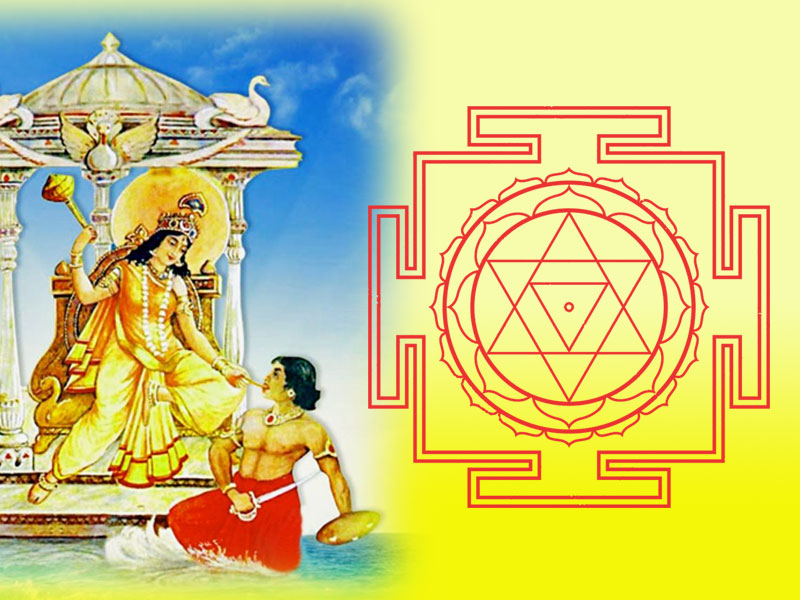
Chant in front of a consecrated Tara Mahavidya Yantra.
Perform the Sadhana wearing a red or white mat and a white dhoti. Stitched garments are not allowed.
Decide the duration of the Sadhana and the number of mala repetitions per day by making a resolve (Sankalp) before starting. Tara Sadhana should always be performed facing North or East.


0 Comments
Leave a Reply
Your email address will not be published. Required fields are marked *