Kanjak Puja: Significance, Importance of Kanjak Puja in Navaratri

Kanjak Puja: Significance, Importance of Kanjak Puja in Navaratri
| Added by:

Kanjak Puja: Significance & Importance of Kanjak Puja in Navaratri

Many Sanatani people also perform Kanya Pujan on the eighth or ninth day of Navaratri. I am also wake up early in the morning, bathe, and begin preparing for the puja by purchasing new clothes and designs. Kanya Pujan involves worshipping nine girls who have not yet reached puberty. These girls age should be 2 to 10 years old only.

For devotees, these nine girls represent the nine principles of Goddess Durga. The young women seated for Kanya Pujan bathe in the morning and wear new clothes.

I have witnessed this Kanya Pujan many times. First, the elders of the family wash the girls' feet with water. A mauli a type of red thread is tied on their hands and a coconut is applied as a tilak.

They are then worshipped and their blessings are sought. After the traditional Navratri Kanya Pujan, the younger girls are given prasad, usually consisting of Puri, Kala Chana or Black Gram, and Suji Halwa.

Some families also worship a young boy as Bhairava, but the rest of the family performs the puja exclusively with girls. Many insist that only girls participate in the Kanjak Puja.

At least two girls should be sent for the Kanjak Puja. More than two girls is well and good. You can perform Kanya Pujan with minimum of 2, 5, 7, 9, 11 girls but at least two girls over Minimum one year of age are required. But I considered at least 2 years at least she will be able to seat on the asana. If nine girls in your area can participate in the Kanjak Puja, that's great. You can worship them in the nine theoretical forms of the Goddess.

Along with offerings and food (many people gift chocolates, thali, biscuits, etc. these days), girls are given gifts, fruits, and money. The results are obvious.

Ensure that girls eat puris, chana, and halwa before going to other houses for the puja. They won't be able to eat much, as they visit other houses where Kanjak Puja is also being performed. So, just one bite is enough and they receive the blessings they ask for by patting your head with their hands.

With a tilak on their heads and threefold attention, love, and devotion, these little girls look divine and are much sought after on the day of Kanjak Puja. Raksha Bandhan and Kanjak Puja are two big days for the small celebrations!!

Note: If you have performed the nine days of ritualistic worship and worshipped the nine girls with true devotion, the Goddess will reside within them when you worship them. It all depends on your devotion and faith in the Mother Goddess. If you invoke the Mother Goddess with true devotion, they are essentially different.

Secondly, if you live outside India and cannot perform the puja for the two girls or have a nearby temple of the Mother Goddess, you can follow this procedure for the final day's puja: prepare a full-fledged pudding at home and pudding and black gram as prasad.

Prepare a plate of offerings (puri, halwa, black gram) according to the number of members in your household, you can also include your son or daughter who lives elsewhere.

Offer the Goddess these offerings from the plate, and after a while, when you say that the mother has accepted the offering, immediately consume it with devotion. Prasad should always be eaten before any other food and consumed as quickly as possible.

Note: The above list and information are based on the food items included in our family during the Navratri fast and information received from friends. If in doubt, please consult your elders.

Frequent Asked Questions(FAQs)

For daily worship, one may dedicate anywhere from 15 to 30 minutes, or even up to an hour. It would be even more beneficial if you were to incorporate a little meditation alongside your worship.

The best time for worship is considered to be between 4:00 AM and 5:30 AM in the morning. This specific period is known as the “Brahma Muhurta”.

If, due to unavoidable circumstances, you are unable to perform your worship, it is not a cause for concern. Simply offer your salutations to your Deity and convey to them, saying, "O Lord, I am unable to perform Your worship today" while explaining the reason for your inability. However, you should always strive to ensure that you do not miss your daily worship on any day, unless such unavoidable circumstances arise.

Yes, bathing purifies our body. This is beneficial not only for Puja but also in general; daily bathing helps prevent premature wrinkles, makes the skin glow, and strengthens one's immunity. However, if for any reason you are unable to bathe, you may still perform the Puja after thoroughly washing your face, hands, and feet.

No, it is highly advisable and excellent to perform the daily Puja yourself within your own home, regardless of your caste. However, if you lack the time or if no one else in the household is able to perform the Puja, you may then enlist the services of a priest.

One should face towards the East or North while performing “Puja”.

1) First, purify yourself by reciting the self-purification mantra; then, perform “Achamana” (ritual sipping of water) to achieve inner purification. Subsequently, you should perform the purification of the seat Asana, the ground called Bhu Shudhi, and the specific area where the worship is taking place.

2) Next, holding Gangajal (holy water from the Ganges), “Akshat” (unbroken rice grains), and a flower in your hands, perform the purification of the Ganesha idol. After the purification is complete, take a small amount of Akshat in your hands, chant the Ganesha mantra 108 times, and then while reciting the “Avahana” (invocation) mantra release the “Akshat” onto the idol slowly.

3) After that, proceed to observe the “Shodashopachara Puja Vidhi” (the ritual of sixteen acts of worship).

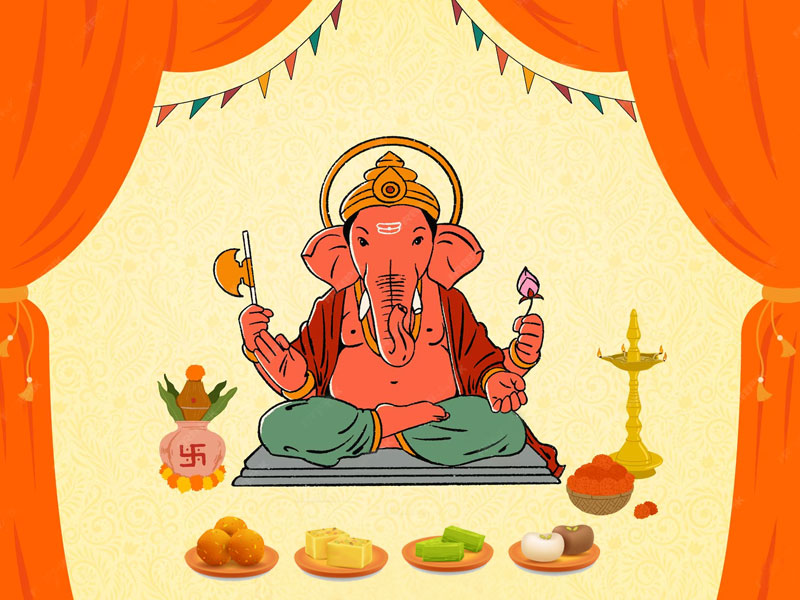
During Ganesh Puja, you may offer to the Lord in the form of Naivedya whatever you wish to present with devotion. Specifically, you may offer Motichoor Laddoos, coconuts, Modaks, any five seasonal fruits, Kheer, and various sweets made with milk.

You may keep the Ganesh idol on the puja platform or in the shrine for as many days as you desire. However, it is essential to perform the Visarjan (immersion) of the Ganesh idol by Bhadra Purnima at the very latest. Because the month of “Shradh Period” begins immediately next day of Bhadra Purnima, during which the immersion ceremony is prohibited. Whenever you perform the immersion, ensure you select an auspicious day; for instance, Monday, Wednesday, Friday, and Sunday are considered suitable. Additionally, you should avoid performing the immersion on Amavasya (New Moon), “Sankranti”, or “Pratipada Tithi”.

Lord Ganesh should be worshipped using the “Shodashopachara Puja Vidhi” (the sixteen-step ritual).

Lord Ganesh is worshipped on the “Chaturthi Tithi” (the fourth day) of the “Shukla Paksha” (waxing phase of the moon) during the month of “Bhadrapada”.

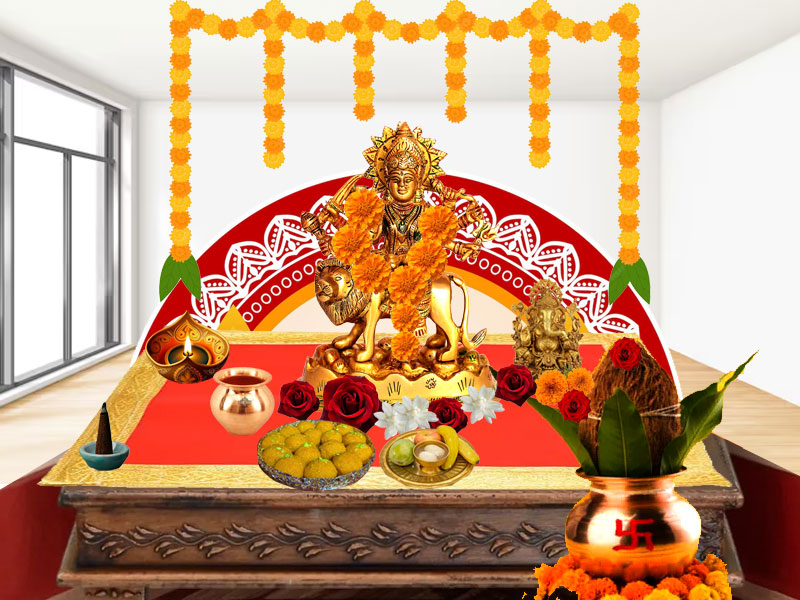
Ghat Sthapana is performed on the first day of Navratri. Barley is sown in an earthen pot and then a water-filled Kalash is placed on it. A silver coin, Gangajal, some Banaspati herbs like red sandalwood, jatamansi, indrajava, bhimseni camphor, a betel nut, and a lump of turmeric are placed inside the Kalash. Five mango leaves are placed on top of the Kalash, followed by a whole coconut wrapped in a red cloth. Shakti is then invoked, symbolizing prosperity and the beginning of the worship of Goddess Durga. The Kalash is considered the abode of gods and goddesses and is kept lit with an eternal flame for nine days.

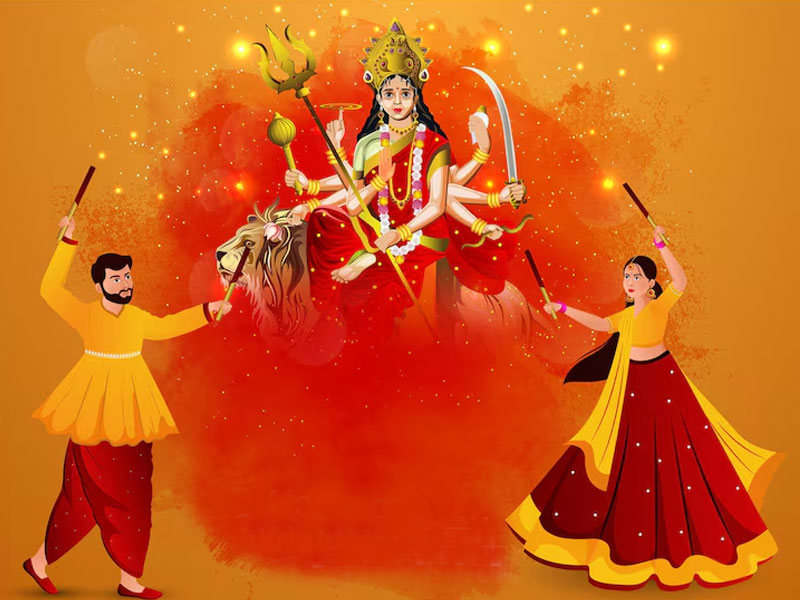
For nine days, Mata Durga should be worshipped daily using the Shodashopachara Puja method. If you wish, you can also chant mantras and perform havan after the puja.

There are four Navratris in a year. The Navratri that falls in September-October is called Gupta Navratri, the Navratri that falls in the Magh month of January-February is called Gupta Navratri, the Navratri that falls in Chaitra month of March-April is called Chaitra/Basantika Navratri, the Navratri that falls in the Jyestha month of June-July is called Gupta Navratri.

Gupta Navaratri occurs twice a year. During this Navaratri, a spiritual seeker performs rituals in secret without anyone else's knowledge in order to attain a specific objective. Gupta Navaratri is considered to be of immense significance for spiritual practice.

Sharadiya Navaratri, which falls during the months of September and October, is celebrated with great enthusiasm by people across the globe.

If you wish to observe the Navaratri fast, you should take a Sankalp (vow) on the very first day of Navaratri, specifying exactly how many days you intend to fast. Generally, some people fast for 7 days and break their fast on Ashtami (the eighth day), while others fast for the full 10 days breaking their fast on Dussehra (the tenth day) following the Kanya Pujan ritual.

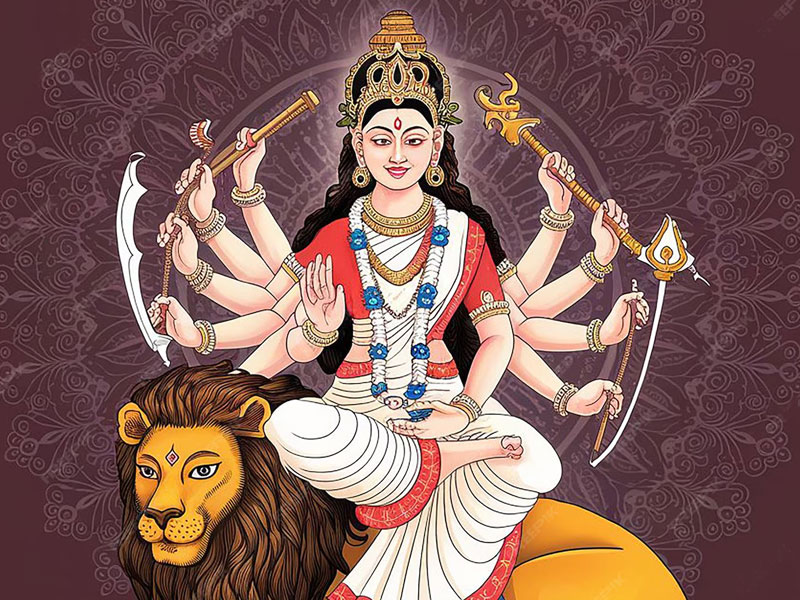
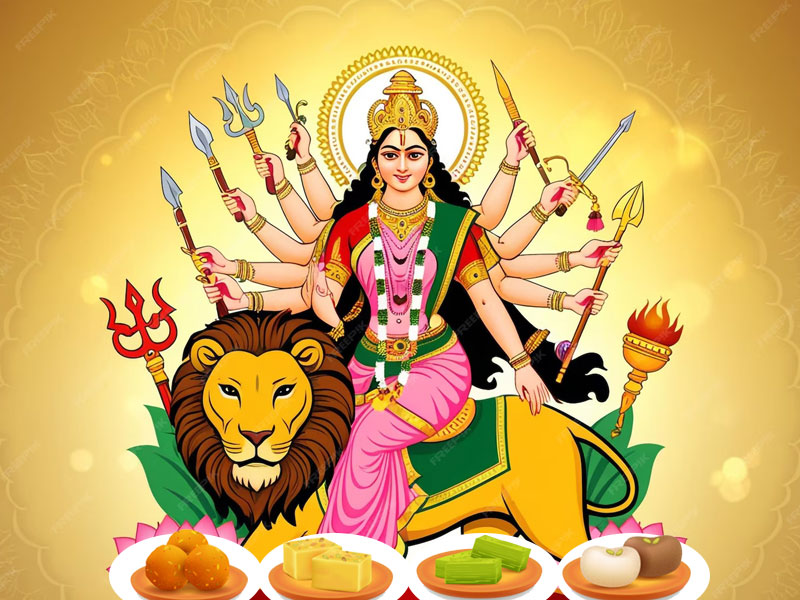
During Navaratri, Kanya Pujan also known as Kanjak involves revering young girls as embodiments of the Divine Mother. These girls are regarded as the living manifestations of the nine forms of Goddess Durga, collectively known as Navadurga.

Devotees complete their worship by treating girls aged 2 to 10 as the direct embodiment of the Goddess, offering them food and gifts; this practice is believed to bring happiness, prosperity, and deliverance from all adversities in life. This ritual is performed specifically to honor the Goddess and to seek her divine blessings.

Following the nine days of Navaratri worship, the Kalash should be immersed during an auspicious time (Shubh Muhurat) on the Dashami Tithi (the tenth day), or immediately after Mahanavami.

Hold a small amount of Akshat (unbroken rice grains) in your hand. While chanting the following mantra, gradually sprinkle the rice grains over the Kalash:

Mantra:

Gachchha Gachchha Surashreshthe Svasthanam Parameshvari |
Pujaradhanakale Cha Punaragamanaya Cha ||

You may distribute the coconut from the Kalash as Prasad (sacred offering) or immerse it in flowing water, as per your preference. Sprinkle the holy water from the Kalash throughout your home, and immerse the earthen pot itself under a tree or in a river. This ritual is believed to usher in positivity, happiness, and prosperity into the home.

Goddess Durga's has 9 forms and those nine forms worship by devotees during the Navaratri period. They are like following:

Day1: Shailaputri

Day2: Brahmacharini

Day 3: Chandraghanta

Day 4: Kushmanda

Day 5: Skandamata

Day 6: Katyayani

Day 7: Kalaratri

Day 8: Mahagauri

Day 9: Siddhidatri

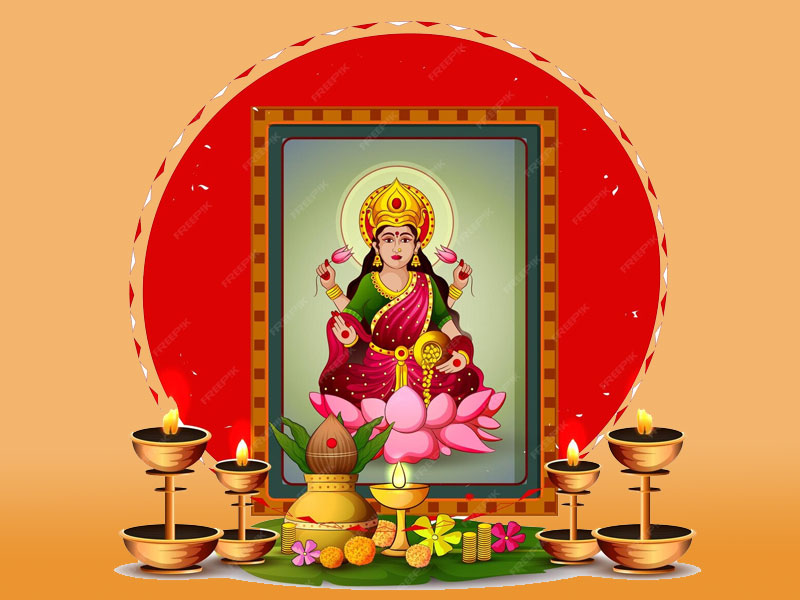
Diwali Lakshmi Puja is best performed during the Pradosh Kala, specifically within the Sthira Lagna (Fixed Ascendant). The Pradosh Kala is generally considered to fall between 5:45 PM and 8:15 PM in the evening. This time corresponds to the Vrisha Lagna (Taurus Ascendant), which is classified as a "Sthira Lagna" according to Vedic Astrology.

During the days of Diwali, one should not sleep late into the morning. Under no circumstances should you disrespect your parents or elders.

Do not deceive anyone, and do not lie to anyone. Every nook and cranny of the house must be absolutely clean and tidy. One should avoid arguments or discord within the home, and one should not sleep during the evening hours. Refrain from consuming any form of intoxicant, and keep the house clean and well-decorated.

Generally, in North India, Diwali is celebrated over a period of five days, observed as follows:

Day 1: Dhanteras

Day 2: Narak Chaturdashi (Chhoti Diwali)

Day 3: Diwali

Day 4: Govardhan Puja

Day 5: Bhai Dooj

To perform Puja alone at home on Diwali, begin by thoroughly cleaning the entire house.

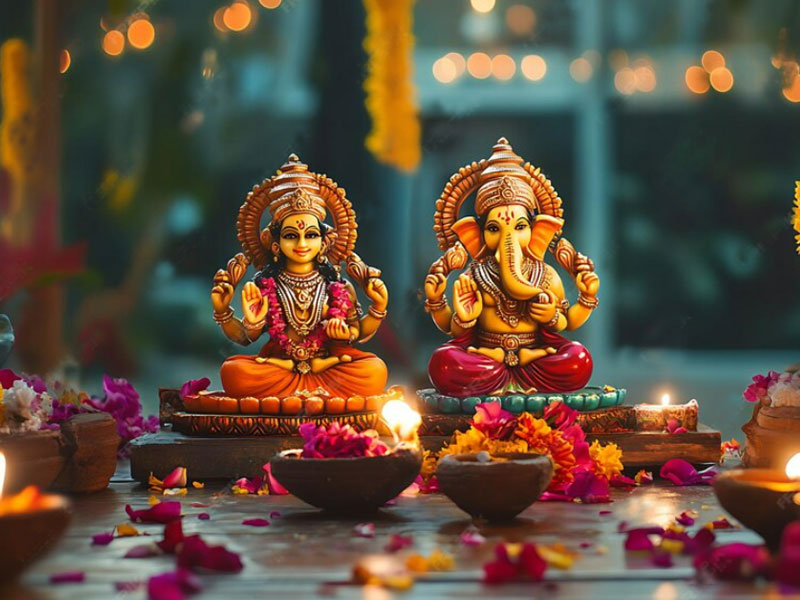
Next, in the North-East corner of the house, spread a red cloth over a raised platform (Chowki) and install the idols of Lord Ganesha and Goddess Lakshmi.

Light ghee lamps; bathe the idols, apply sandalwood paste and a tilak (sacred mark) to them, and then offer flowers, fruits, and sweets. Finally, perform the worship using incense (dhoop), lamps (deep), and flowers. Conclude the ritual by performing the Aarti (hymn of worship) for Lord Ganesha and Mother Lakshmi, using either camphor or a ghee lamp. Afterward, bow down in reverence and distribute the Prasad (sacred food offering) among everyone present.

Dhanteras falls on the Trayodashi Tithi (thirteenth day) of the Krishna Paksha (waning phase of the moon) during the month of Kartika. It marks the first day of the five-day festival of Diwali. On this day, Lord Dhanvantari, Goddess Lakshmi, and Lord Kubera are worshipped. Purchasing new utensils, gold or silver jewelry, or other items on this day is considered extremely auspicious.

Dhanvantari Trayodashi, is known as Dhanteras. On this day, one should worship Lord Dhanvantari, Goddess Lakshmi, and Lord Kubera. It is considered highly auspicious to purchase gold or silver jewelry, new utensils, coriander seeds, or a broom on this day.

In the evening, a four-faced lamp (Choumukha Deepak) is burned for Lord Yamaraj to pray for the longevity of all family members; during the day, the house is thoroughly cleaned, and in the evening, Lakshmi Pujan (worship of Goddess Lakshmi) is performed.

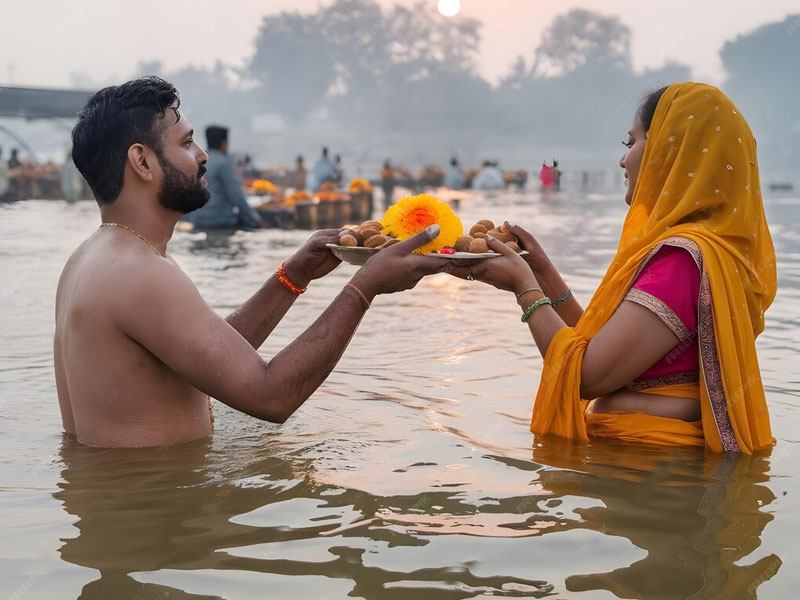
Chhath Puja is celebrated every year on the Shashthi Tithi or the sixth day) of the Shukla Paksha and waxing phase of the moon during the month of Kartik. It falls exactly six days after Diwali.

During Chhath Puja, the primary deities worshipped are “Surya Dev” hence the name “Surya Shashthi” and “Chhathi Maiya” is Goddess Shasthi. It is believed that Goddess Shasthi always protects children, and worshipping her blesses the household with a male child.

Chhath Puja is a major festival spanning four days, beginning on “Kartik Shukla Chaturthi” is the fourth day and continuing until “Saptami Tithi” is the seventh day. The rituals include:

Day 1: Nahay-Khay;

Day 2: Kharna;

Day 3: Sandhya Arghya (offering to the setting sun); and

Day 4: Usha Arghya (offering to the rising sun). This festival is dedicated to Surya Dev and Chhathi Maiya.

Chhath Puja is a difficult fast that continues for 36 hours without water (Nirjala). Purity holds special significance in this observance, wherein everything is strictly sattvic and pure and wholesome. The ritual begins on the first day with 'Nahay-Khay,' followed by 'Kharna' on the second day; the third day features the 'Sandhya Arghya' and evening offering, and the fast concludes called Parana on the fourth day with the 'Usha Arghya' or morning offering.

0 Comments

Leave a Reply

Your email address will not be published. Required fields are marked *