
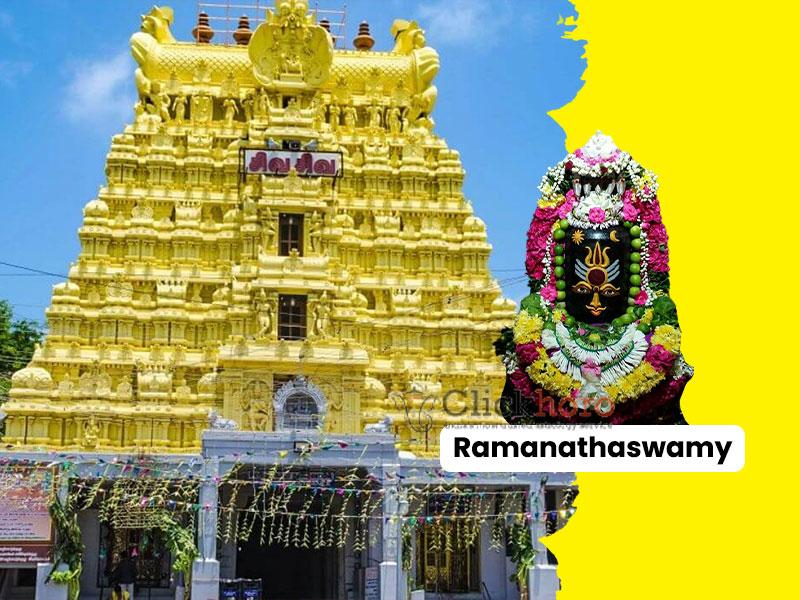
Who is Rameshwaram
Rameshwar Jyotirlinga is the 8th Jyotirlinga, each one unique and different from the others. Lord Rama established this Jyotirlinga when he went to perform the "Setu Bandha" consecration. After the consecration, Ram and his army would go to Lanka to fight the war.
The important thing is that for the consecration of Setubandha and Lord Rameshwar, a qualified Pandit was needed who could do this work. But no one was found. In the end, Ravana himself came to perform the consecration and he also brought Mother Sita with him.
Because Lord Rama was married, for any auspicious ceremony, such as a housewarming ceremony, both husband and wife must sit together for the puja and worship. Lord Rama's wife, Sita, was captured by Ravana, the demon king of Lanka, and taken to his kingdom.
In his quest to find and rescue Sita, Rama received the support of the monkey king, Sugreeva. When Hanuman informed them that Sita was held captive in Lanka, Rama and his brother, Lakshmana, along with Sugreeva and a large army of monkeys, arrived at the seashore.
Lanka was across the ocean, a sea that seemed impossible for them to cross. Aware of the power of Ravana and his powerful brothers and son, Rama pondered how to reach Lanka and participate in the great battle that lay ahead.
Rama then felt thirsty and requested Lakshmana to bring water by the monkeys. The monkeys immediately brought him pure and cool water. As Rama began to drink, he stopped, remembering that he had not yet worshipped Lord Shiva. Then, Rama fashioned a Shivalinga from sand and began a profound worship of Lord Shiva, performing all the prescribed rituals.
He sang praises, recite mantras, meditated, and danced in devotion to Lord Shiva. Rama prayed, “Oh Lord, protector and savior of devotees, I surrender to you. Ravana is a powerful warrior, conqueror of the three worlds, and your devotee. He has received your boons, which have made him arrogant.
How will I cross this deep ocean and win the war with only an army of monkeys? I, too, am your devotee.” And I have no unrighteousness in the face of righteousness. Hey Anatriyami, you know everything, so why do I want to fight? Please take my side and bless me.” Lord Shiva was pleased with Rama's devotion and appeared before him with Goddess Parvati and his Ganas, Shiva's companions.
Rama and others devoutly worshipped Lord Shiva's luminous form. Pleased, Lord Shiva lovingly said, "Oh Ram, you are the master of this universe. You are the protector of these three worlds. You have always upheld righteousness. I can do sometimes mistakes, but you can never do so.
Therefore, Oh Ram, I bless you; you will surely be victorious; unrighteousness will be destroyed, and righteousness will always prevail." That is why Lord Rama had consecrated that Shivlinga and hence it is known as Rameshwara. It got the name Jyotirlinga because;
1) this linga was made and consecrated by Lord Rama, the form of Lord Vishnu.
2) This is the lingam from which Lord Shiva himself came out and gave darshan to Rama. That is why this lingam is called Jyotirlingam.
Rama established the Rameshwar Jyotirlinga. With these words, Rama received Lord Shiva's blessing for victory and permission to fight against the great king Ravana. Ram, with utmost devotion, requested Shiva, "Hey Mahadev, please reside in the ocean for the welfare of the people and to purify the world." Shiva accepted Rama's request and took the form of a Jyotirlinga, which became famous throughout the world as Rameshwaram.
Rameshwar Jyotirlinga and its location is a mystery?
An important aspect of the pilgrimage to Rameshwaram is bathing in the 64 tirthas called as sacred water sources those spread across the island and its surroundings. The Rameshwaram temple itself houses 22 sacred tirthas, each possessing pure, divine water with a unique taste and varying temperatures.
The waters of each tirthas are believed to have healing powers. Recent scientific studies have shown that these waters are free of bacteria, despite being used by numerous people daily. It is believed that the number 22 symbolizes the 22 arrows in Rama's quiver. Bathing in these 22 sacred ponds is an essential part of the pilgrimage to Rameshwaram.
How to Reach Rameshwar Jyotirlingam
Air Port
Madurai Airport is approximately 177 km from Rameswaram. Tuticorin Airport (TCR), Thoothukudi, is approximately 196 km from Rameswaram. Tiruchirappalli International Airport is approximately 229 km from Rameswaram.
Train
Rameswaram has a railway station and is well connected to major cities like Mumbai, Delhi, Kolkat and Chennai with other cities of the country by express and local passenger trains.
Road
Rameswaram has a bus terminus. Mofussil buses, intra-city buses, and private omnibuses are available from major cities in Tamil Nadu. Rameswaram is approximately 600 km from Chennai, the capital of Tamil Nadu.
Rameshwaram Jyotirlinga in Google Map
Who is Rameshwaram
Rameshwar Jyotirlinga is the 8th Jyotirlinga, each one unique and different from the others. Lord Rama established this Jyotirlinga when he went to perform the "Setu Bandha" consecration. After the consecration, Ram and his army would go to Lanka to fight the war.
The important thing is that for the consecration of Setubandha and Lord Rameshwar, a qualified Pandit was needed who could do this work. But no one was found. In the end, Ravana himself came to perform the consecration and he also brought Mother Sita with him.
Because Lord Rama was married, for any auspicious ceremony, such as a housewarming ceremony, both husband and wife must sit together for the puja and worship. Lord Rama's wife, Sita, was captured by Ravana, the demon king of Lanka, and taken to his kingdom.
In his quest to find and rescue Sita, Rama received the support of the monkey king, Sugreeva. When Hanuman informed them that Sita was held captive in Lanka, Rama and his brother, Lakshmana, along with Sugreeva and a large army of monkeys, arrived at the seashore.
Lanka was across the ocean, a sea that seemed impossible for them to cross. Aware of the power of Ravana and his powerful brothers and son, Rama pondered how to reach Lanka and participate in the great battle that lay ahead.
Rama then felt thirsty and requested Lakshmana to bring water by the monkeys. The monkeys immediately brought him pure and cool water. As Rama began to drink, he stopped, remembering that he had not yet worshipped Lord Shiva. Then, Rama fashioned a Shivalinga from sand and began a profound worship of Lord Shiva, performing all the prescribed rituals.
He sang praises, recite mantras, meditated, and danced in devotion to Lord Shiva. Rama prayed, “Oh Lord, protector and savior of devotees, I surrender to you. Ravana is a powerful warrior, conqueror of the three worlds, and your devotee. He has received your boons, which have made him arrogant.
How will I cross this deep ocean and win the war with only an army of monkeys? I, too, am your devotee.” And I have no unrighteousness in the face of righteousness. Hey Anatriyami, you know everything, so why do I want to fight? Please take my side and bless me.” Lord Shiva was pleased with Rama's devotion and appeared before him with Goddess Parvati and his Ganas, Shiva's companions.
Rama and others devoutly worshipped Lord Shiva's luminous form. Pleased, Lord Shiva lovingly said, "Oh Ram, you are the master of this universe. You are the protector of these three worlds. You have always upheld righteousness. I can do sometimes mistakes, but you can never do so.
Therefore, Oh Ram, I bless you; you will surely be victorious; unrighteousness will be destroyed, and righteousness will always prevail." That is why Lord Rama had consecrated that Shivlinga and hence it is known as Rameshwara. It got the name Jyotirlinga because;
1) this linga was made and consecrated by Lord Rama, the form of Lord Vishnu.
2) This is the lingam from which Lord Shiva himself came out and gave darshan to Rama. That is why this lingam is called Jyotirlingam.
Rama established the Rameshwar Jyotirlinga. With these words, Rama received Lord Shiva's blessing for victory and permission to fight against the great king Ravana. Ram, with utmost devotion, requested Shiva, "Hey Mahadev, please reside in the ocean for the welfare of the people and to purify the world." Shiva accepted Rama's request and took the form of a Jyotirlinga, which became famous throughout the world as Rameshwaram.
Rameshwar Jyotirlinga and its location is a mystery?
An important aspect of the pilgrimage to Rameshwaram is bathing in the 64 tirthas called as sacred water sources those spread across the island and its surroundings. The Rameshwaram temple itself houses 22 sacred tirthas, each possessing pure, divine water with a unique taste and varying temperatures.
The waters of each tirthas are believed to have healing powers. Recent scientific studies have shown that these waters are free of bacteria, despite being used by numerous people daily. It is believed that the number 22 symbolizes the 22 arrows in Rama's quiver. Bathing in these 22 sacred ponds is an essential part of the pilgrimage to Rameshwaram.
How to Reach Rameshwar Jyotirlingam
Air Port
Madurai Airport is approximately 177 km from Rameswaram. Tuticorin Airport (TCR), Thoothukudi, is approximately 196 km from Rameswaram. Tiruchirappalli International Airport is approximately 229 km from Rameswaram.
Train
Rameswaram has a railway station and is well connected to major cities like Mumbai, Delhi, Kolkat and Chennai with other cities of the country by express and local passenger trains.
Road
Rameswaram has a bus terminus. Mofussil buses, intra-city buses, and private omnibuses are available from major cities in Tamil Nadu. Rameswaram is approximately 600 km from Chennai, the capital of Tamil Nadu.


0 Comments
Leave a Reply
Your email address will not be published. Required fields are marked *